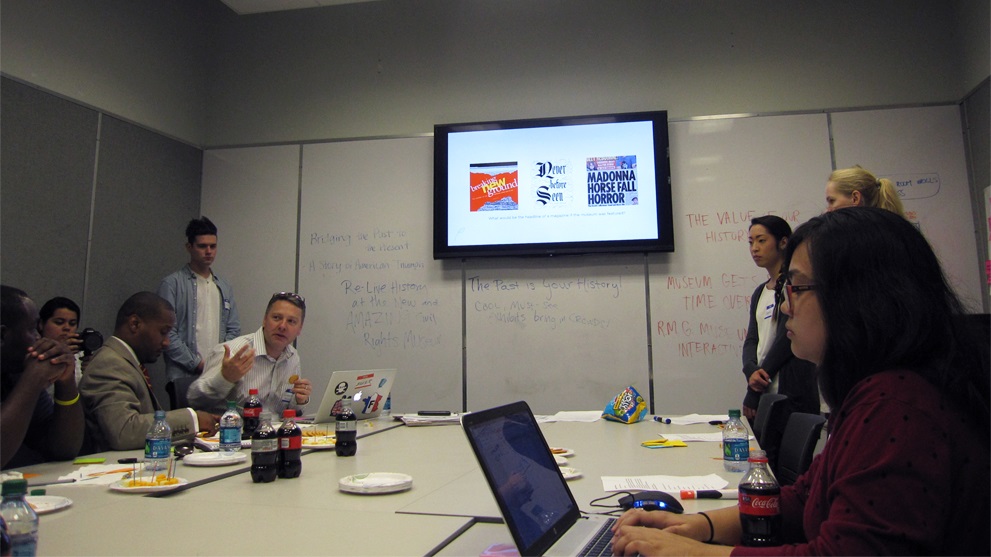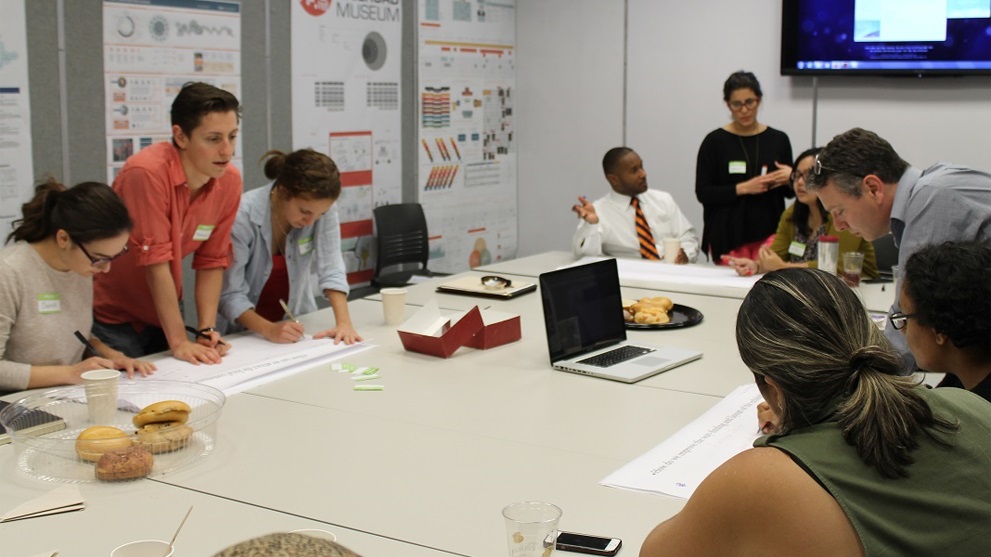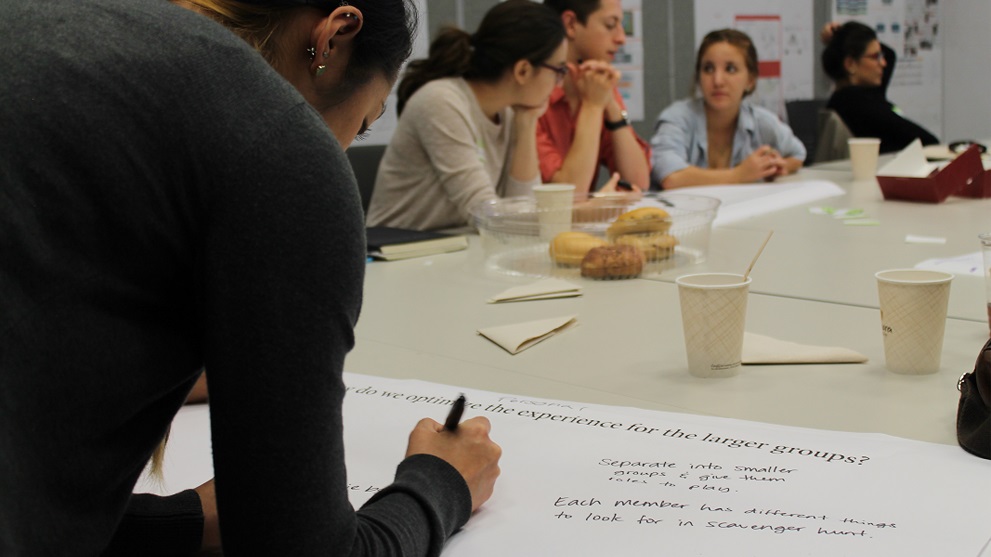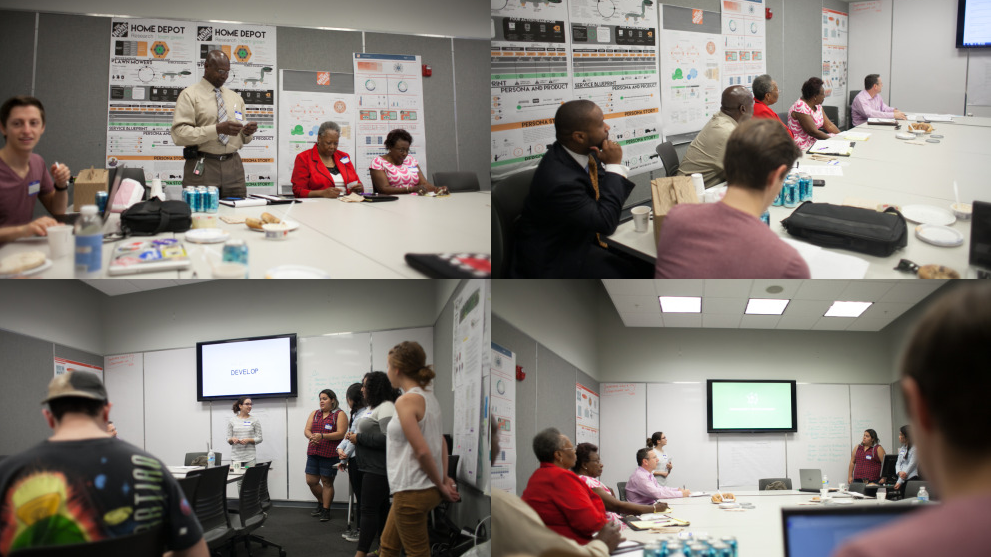
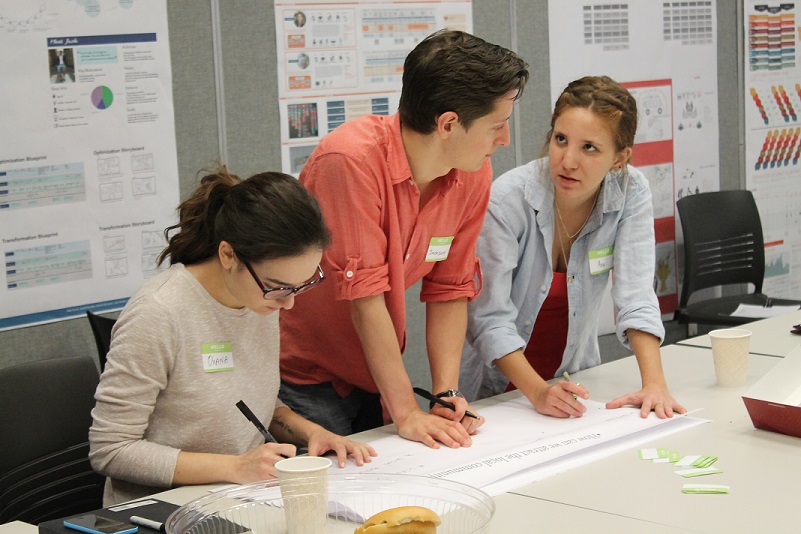
After visiting the museum site and gaining preliminary first-hand research, our team broke into three small groups that each lead a 'co-creation' session. Working directly with the client, each session covered the first three stages of the double diamond process. Together alongside stakeholders we discovered how the museum currently functioned, defined the museum's most pertinent problems, and developed ideas that could potentially solve these problems. In a last fourth session each group delivered concepts as solutions to the museum's key issues.
I was part of the first group whose role was to lead the first co-creation to understand the museum and the stakeholders, as well as introduce them to our service design process. In the following sessions we acted as participants in each different activity, co-creating with the stakeholders. We asked questions from our designers' perspective and documented the experience. My group later on designed several new tours based on the established problems.
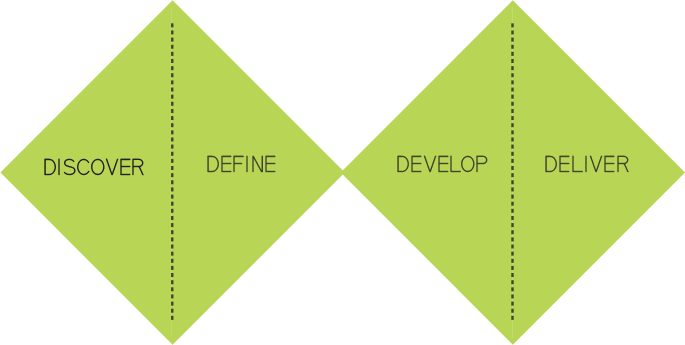
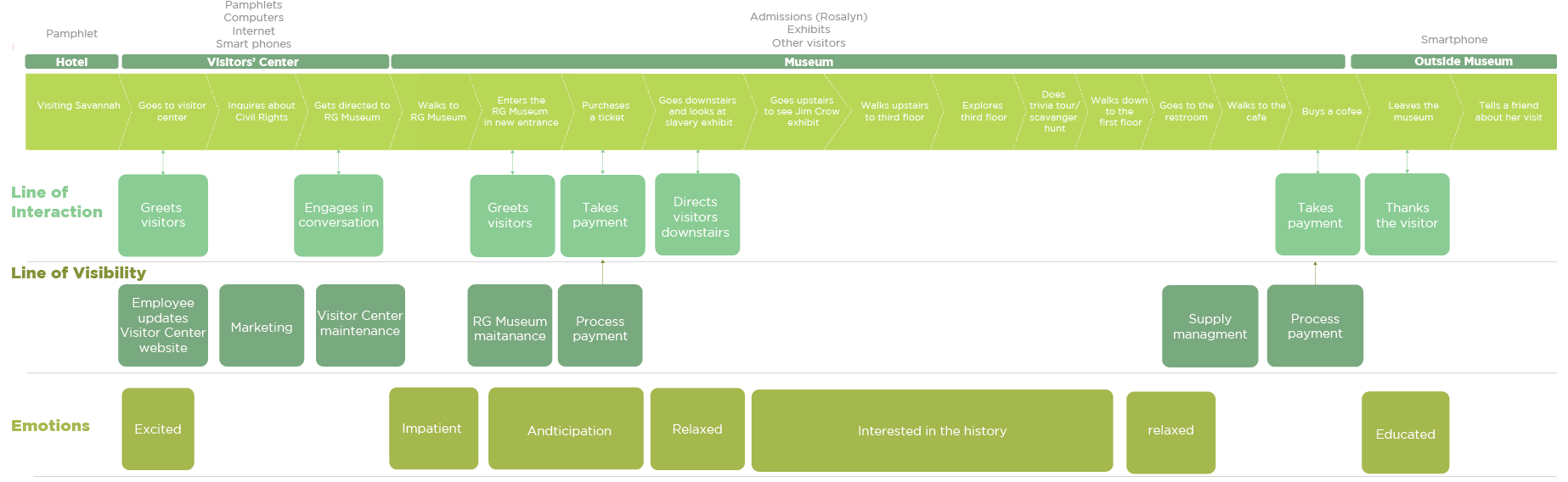
Using a variety of co-creation methods, our team worked to discover all points of view of the museum, including the service needs and issues. During our first session with the client our primary focus was to gain as much information as possible about their service.
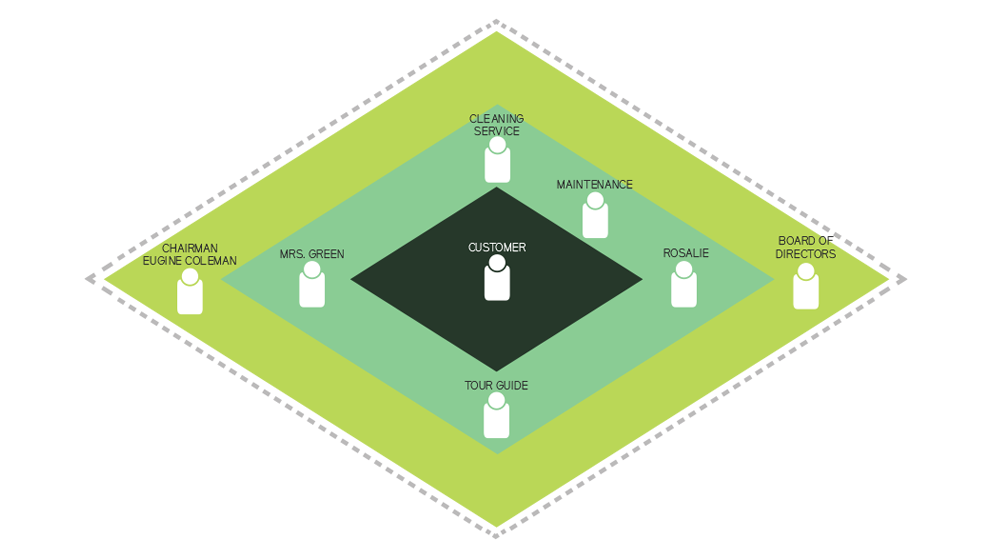
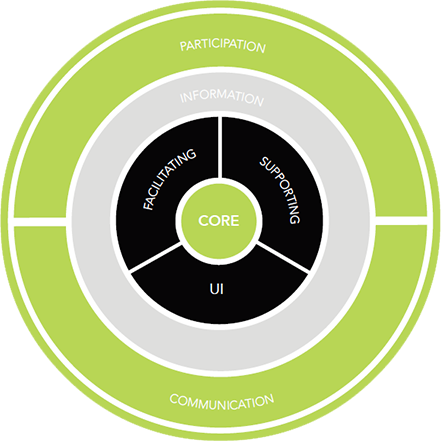
Together with our clients we developed a stakeholder map. We asked them to name all the members of their staff and participants of their service, listing as many as possible. We then proceeded to organize all of these members into categories of core, direct, and indirect in relation to the user of the service. At the core were the focus of their museumn, aka the customer. Staff directly influences the customer's experience. Out of sight stakeholders such as the board of directors indirectly influenced the core user.
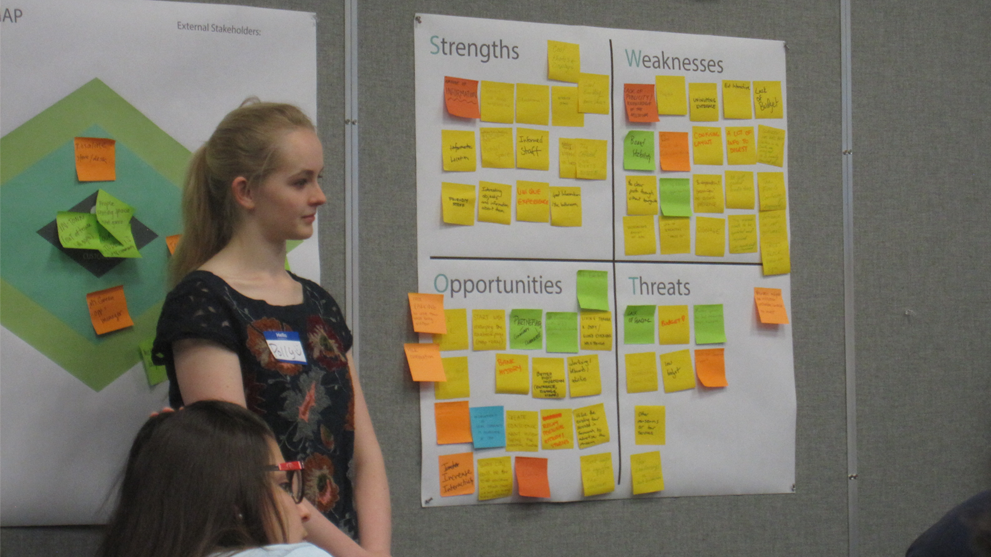
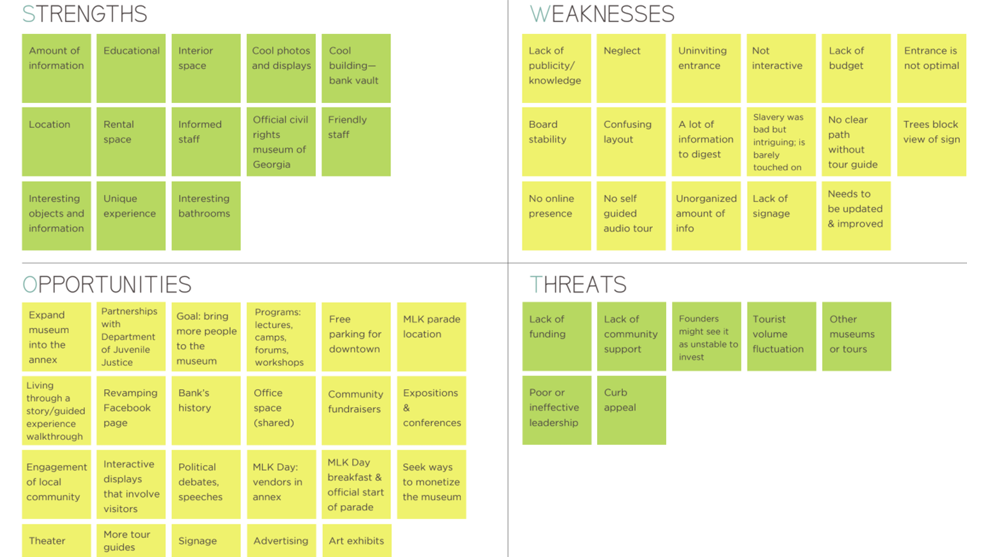
We also developed a SWOT analysis alongside our clients. Rows were labeled as internal or external, while columns were helpful or harmful. In the top left quadrant, Strengths were internal and helpful. Stakeholders listed positive qualities such as the unique educational value of the museum. For Weaknesses, the unorganized and unoptimized information in the exhibits were internal and harmful. Our clients noted that expanding the museum and hosting local events were external and helpful opportunities. Lack of funding and support for the museum were threats. These were external and harmful.
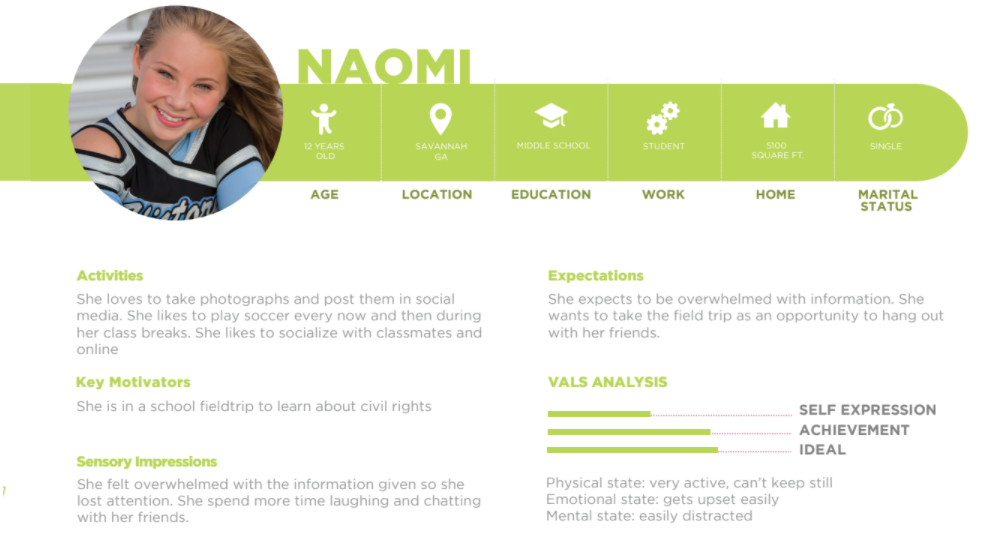
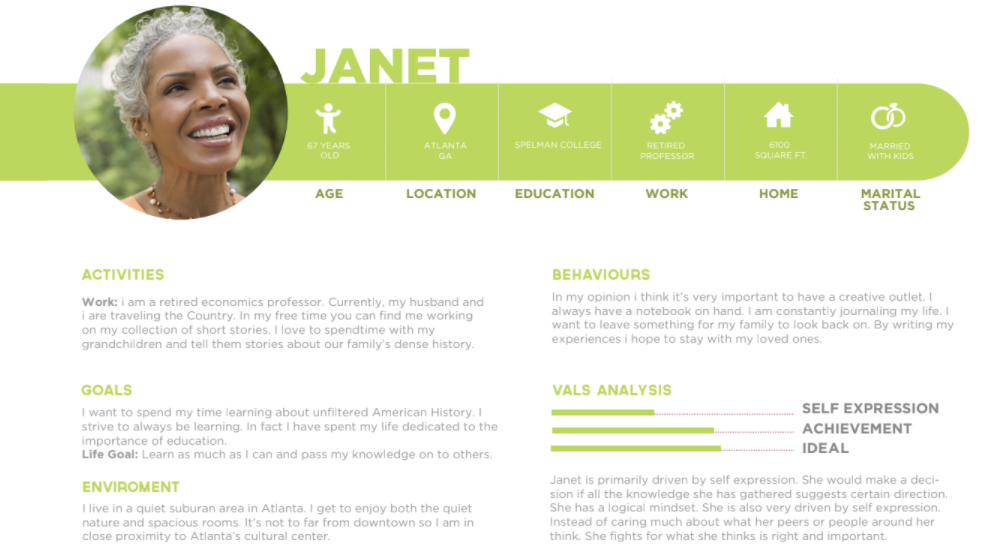
After the session we developed two personas based on the two groups who attend the museum the most. Naomi is based on the student experience and Janet represents the tourist experience.
After reviewing strengths and weaknesses, we gathered insights and analyzed the museum experience. During this session our team brainstormed concepts that optimize and transform existing services. Based on the info collected during our first session, we addressed our most important strategic questions.
Both the designers and clients split up into four groups and practiced roulette storming. Each team answered the strategic problems according to different themes such as memorable and inspirating, and extreme and crazy, blue sky and dreamy.
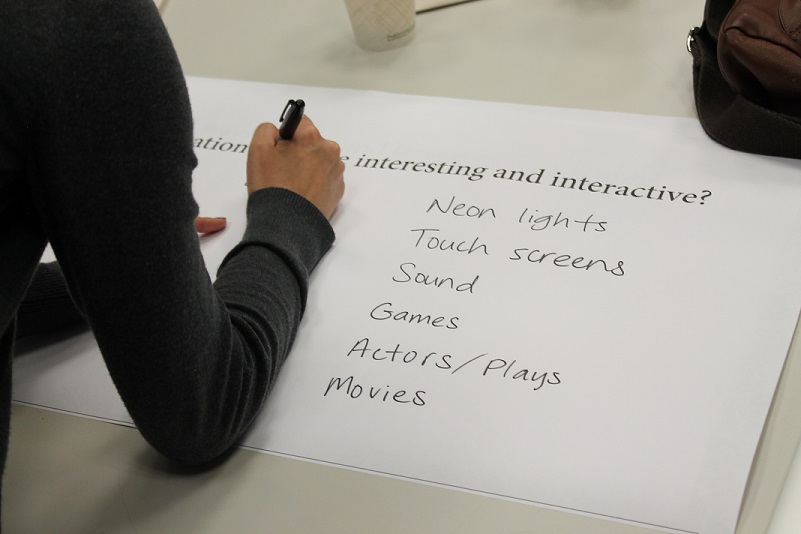
Groups then sorted their ideas and chose a favorite one. Some of these ideas included:
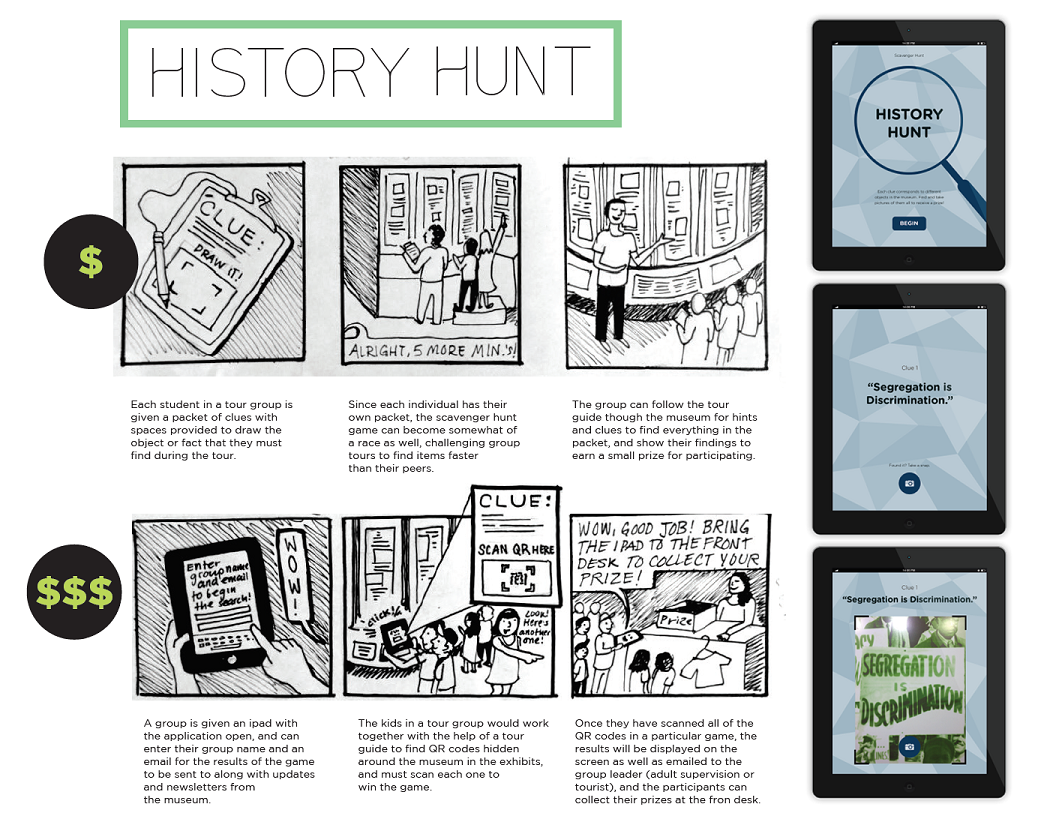
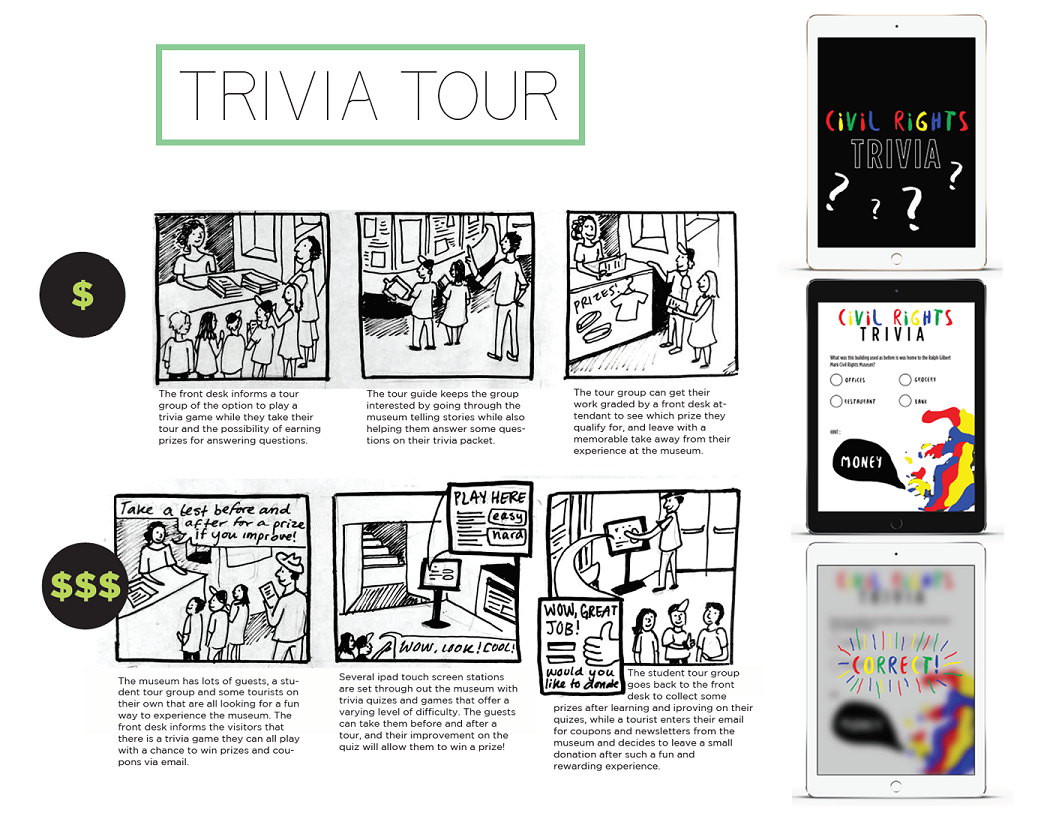
For Session 3 the team developed concepts based on the previous established needs. Eight different concepts covering Wayfinding, Interactive Exhibits and Community Involvement were introduced for critique.
For Wayfinding, we proposed a timeline tour, treasure hunt tour, trivia tour, and self-guided tour.
For Interactive Exhibits, we had ideas for augmented reality companion app, and a planetarium/imaginarium.
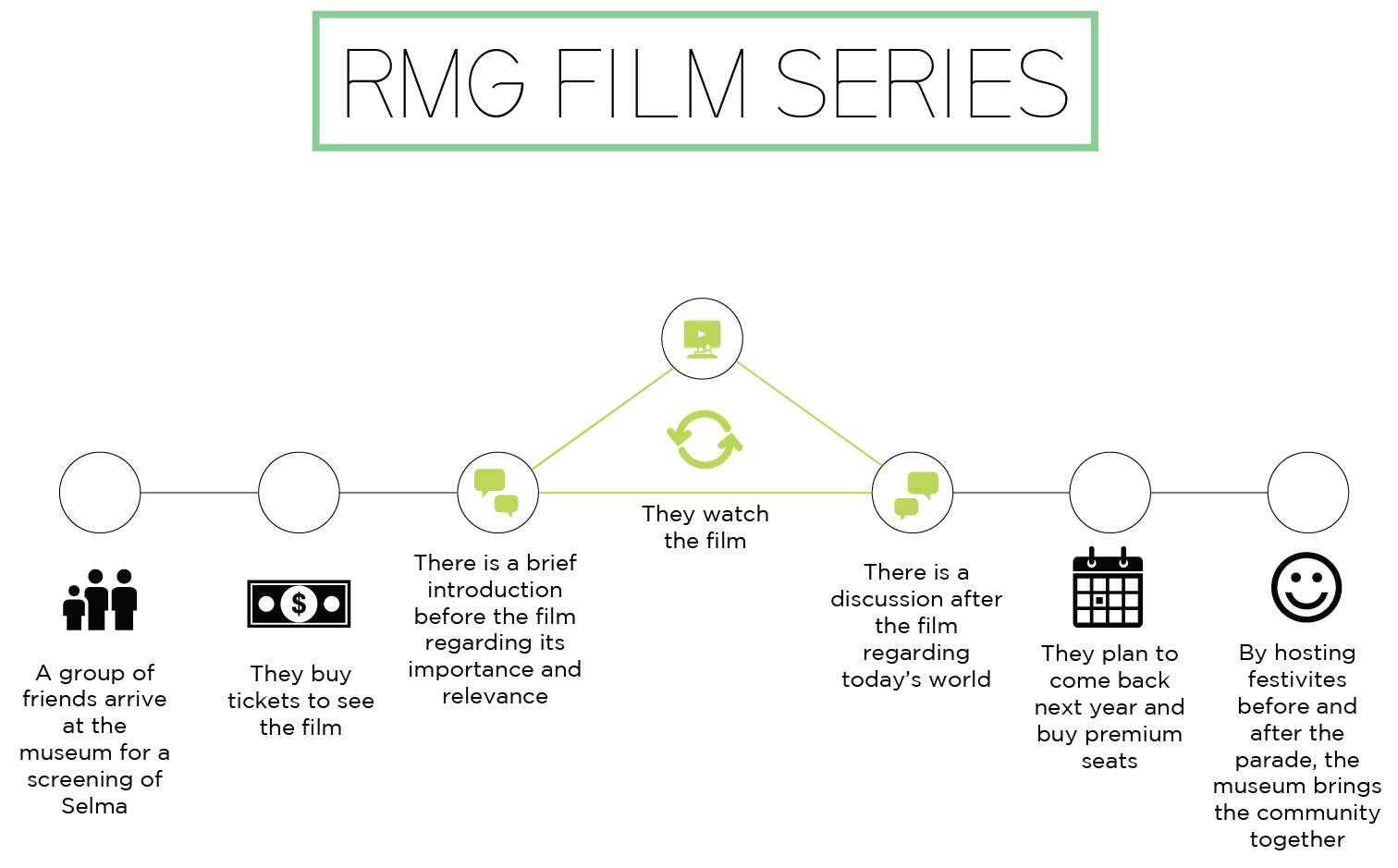
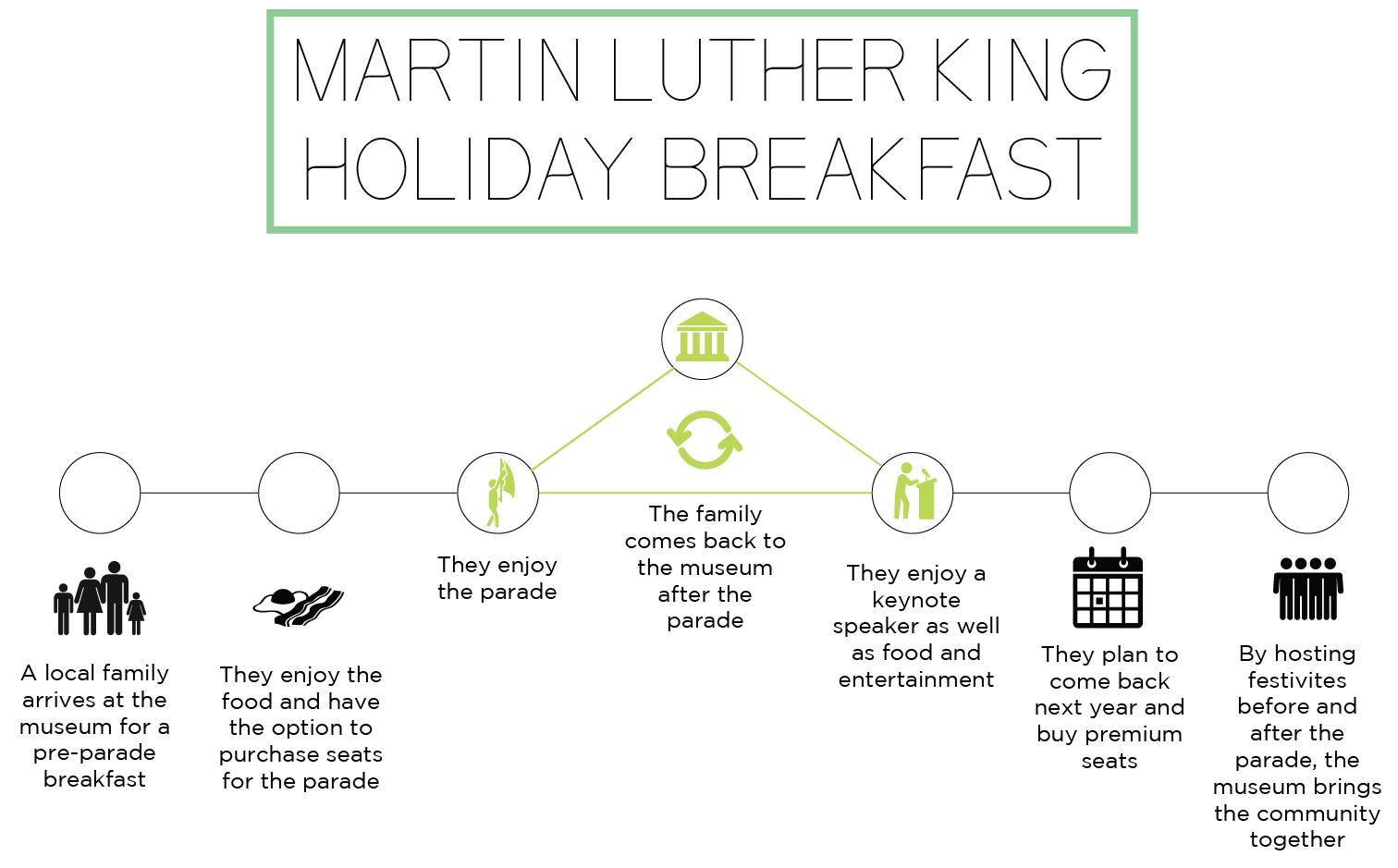
Our concepts for Community Involvement were weekly film screenings and a Dr Martin Luther King Jr Day event.
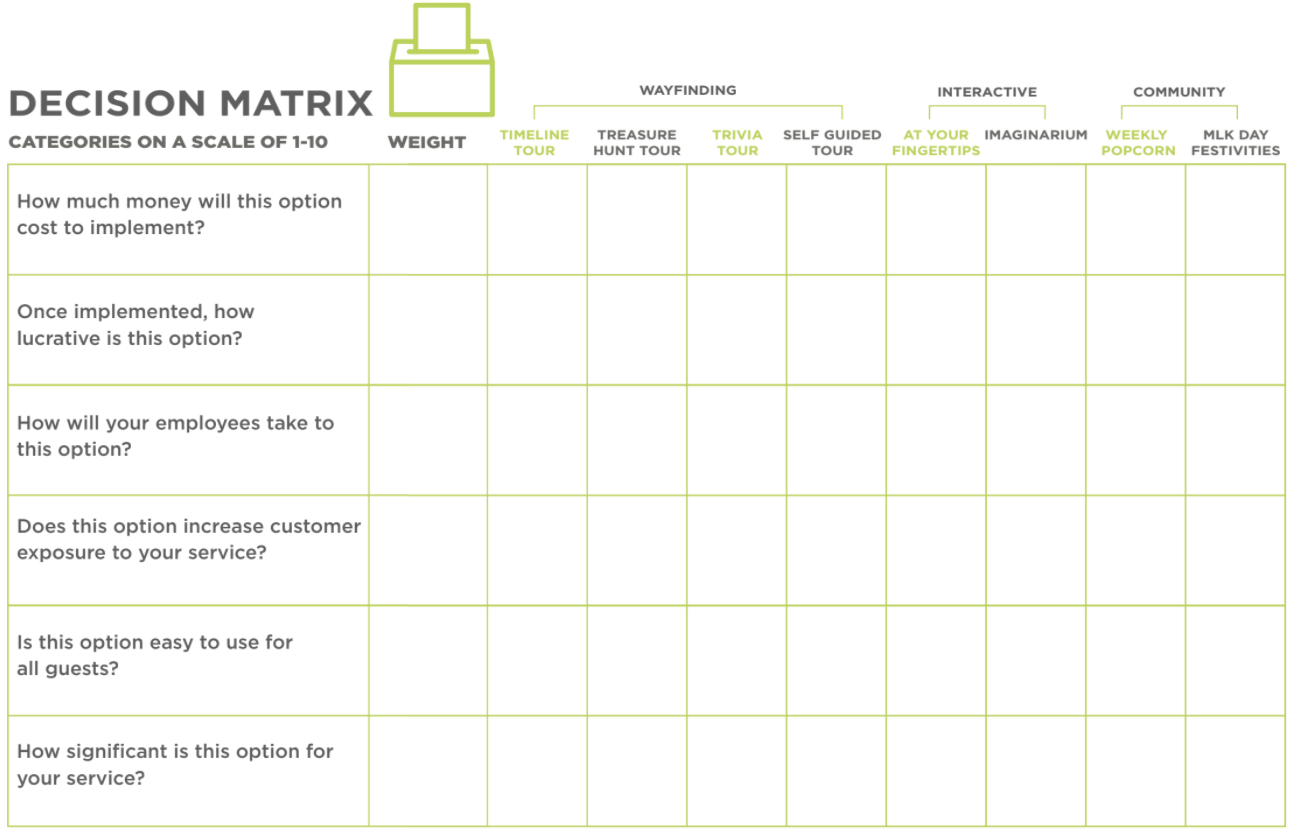
We asked the clients and the team to rate the concepts based on categories in order to see what ideas were aligned to important stakeholder needs and objectives. We voted on each concept using a decision matrix. Each idea was scored based on accessibility, viability, feasibility, acceptability, usability, and desirability.
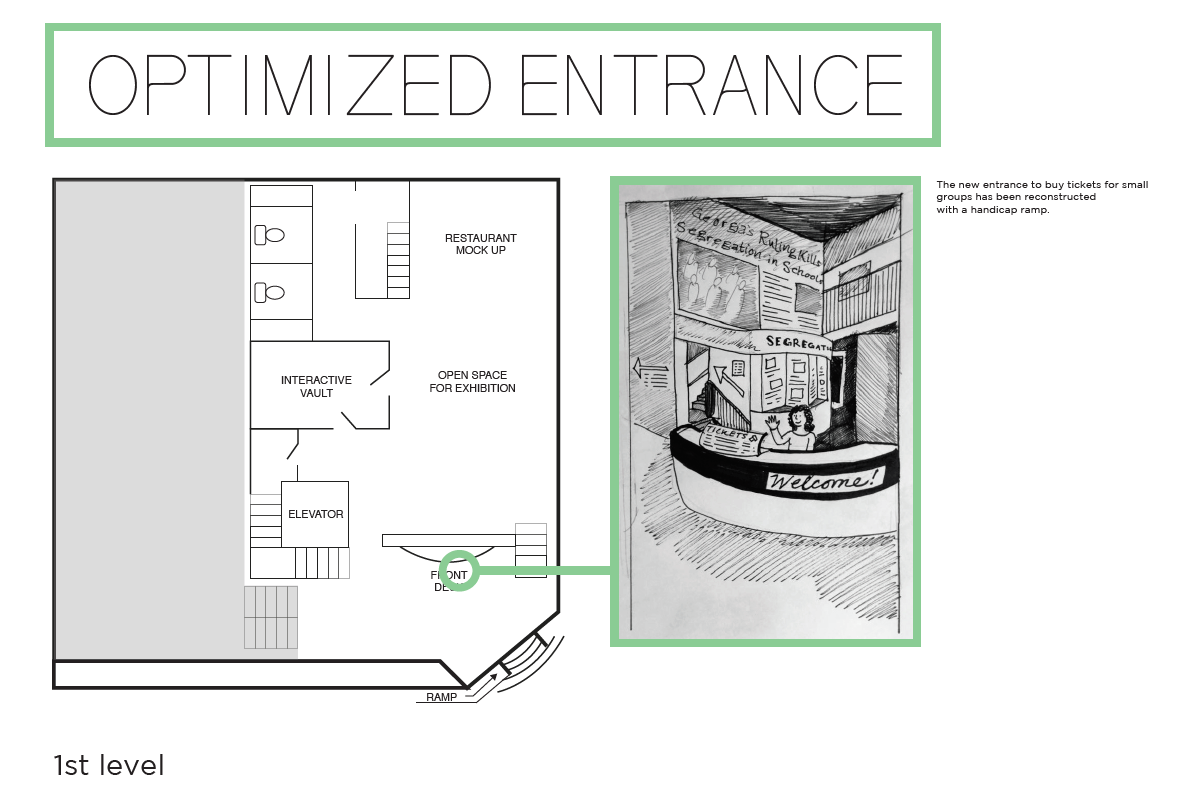
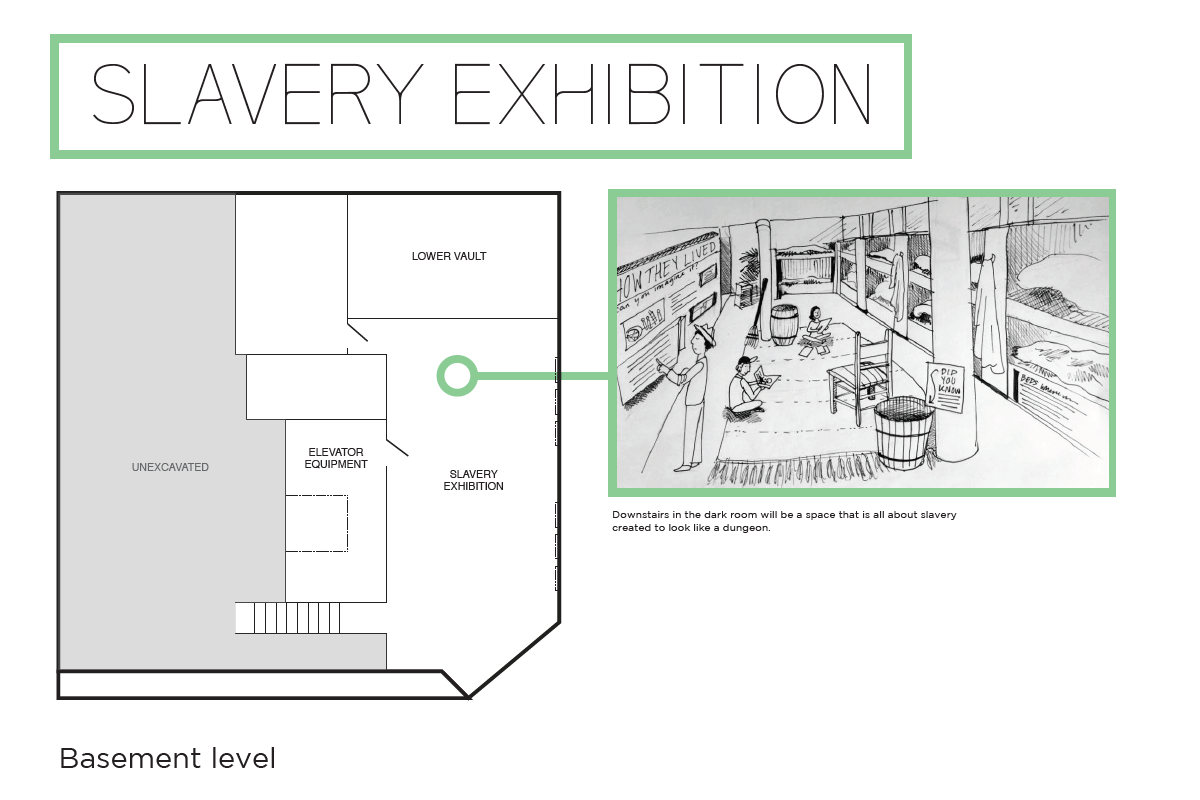
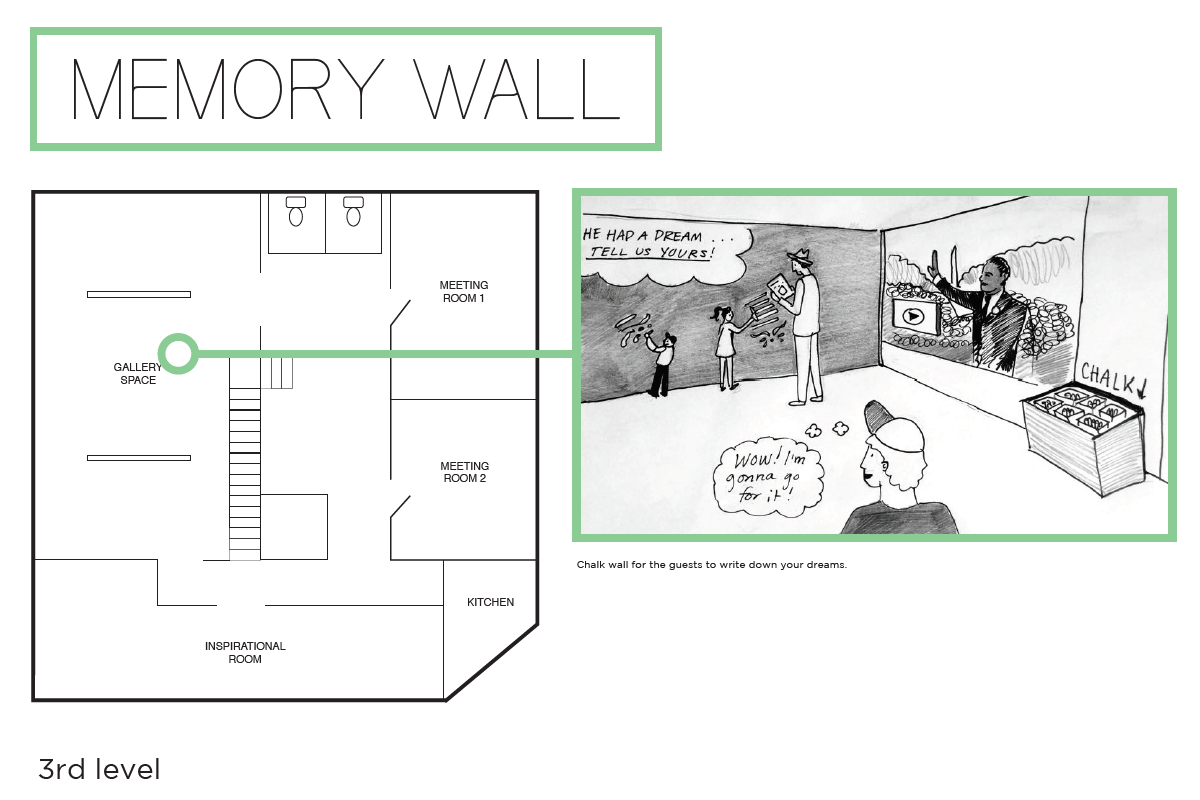
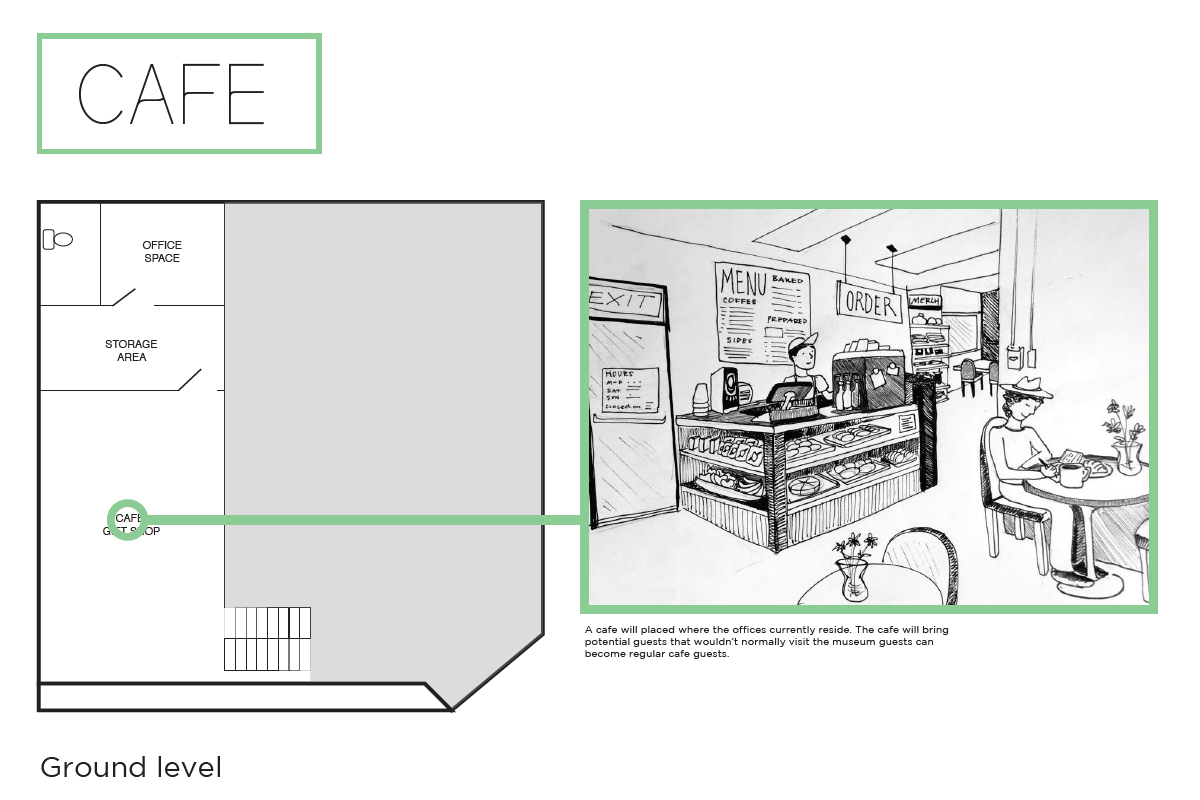
For our last session each team tackled a problem and developed several designs as a solution. Bringing in our clients in one last time, we presented them a plan of action to re-imagine and transform the Ralph Mark Gilbert Museum with following solutions.
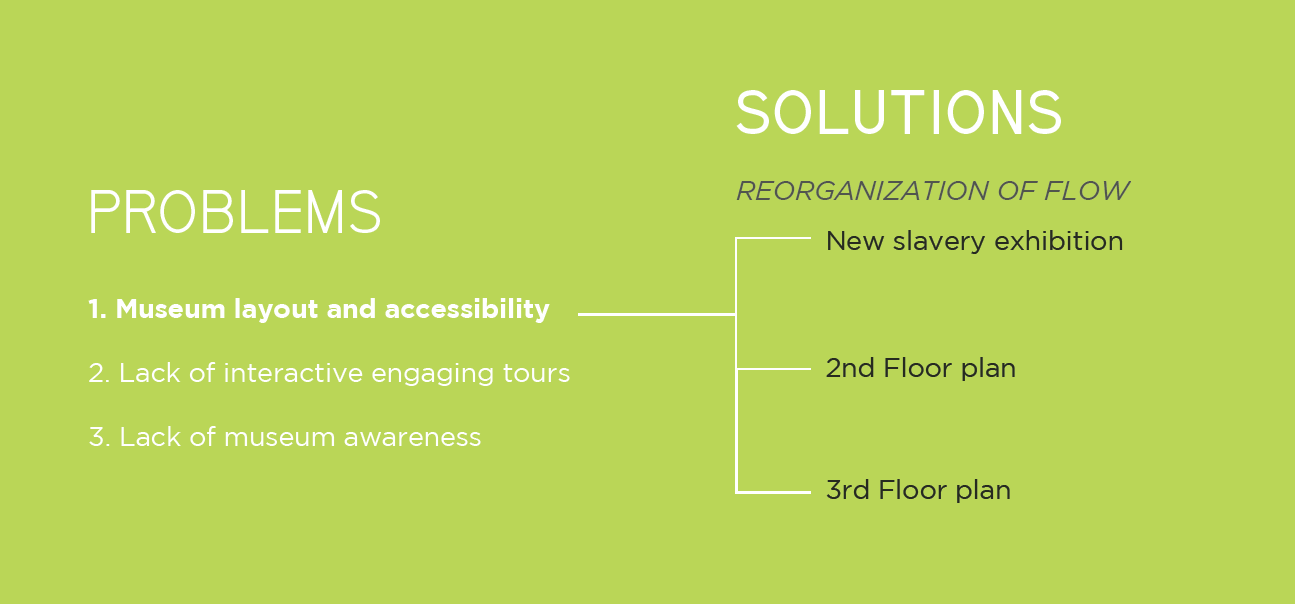
Problem: Ineffective and counterintuitive flow throughout the museum’s exhibits.
Solution: Reorganize the spaces to deliver a more seamless and coherent understanding of the civil rights movement. This also becomes an effective way to organize big groups throughout the museum visit.
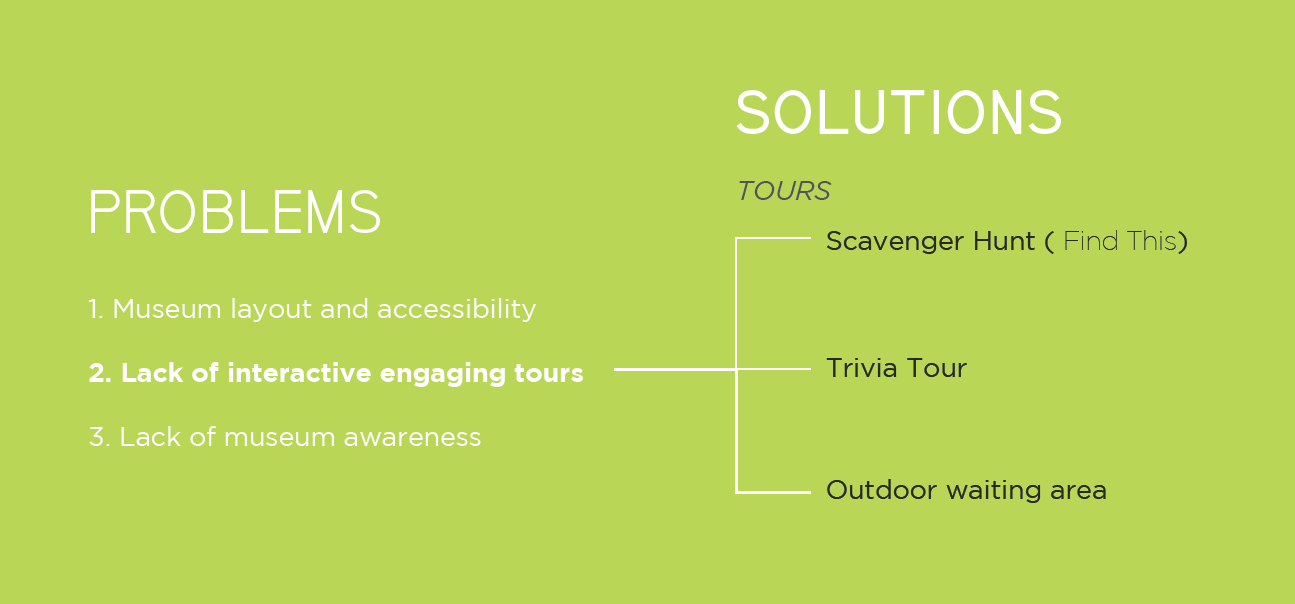
Problem: Indoor space becomes crowded as large groups wait for guided tours.
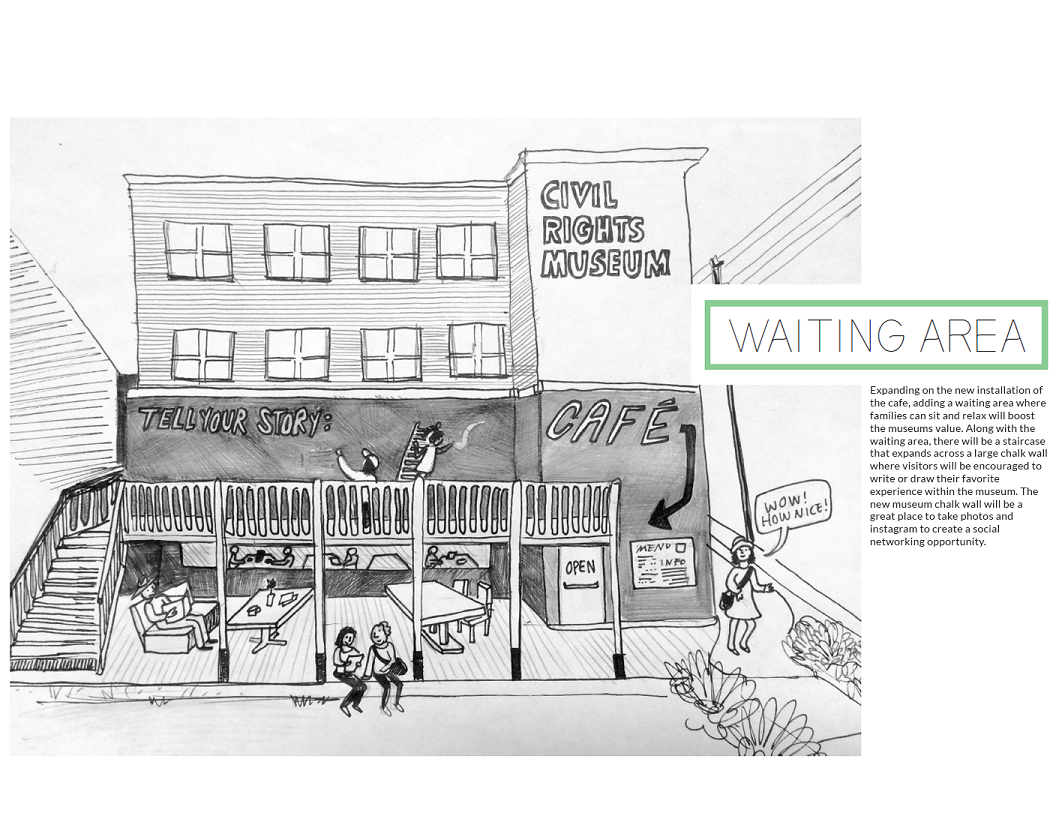
Solution: Visitors can enjoy the museum with self-guided tours. An outdoor waiting area and cafe stocked with souvenirs delivers a friendly open space for visitors to rest.
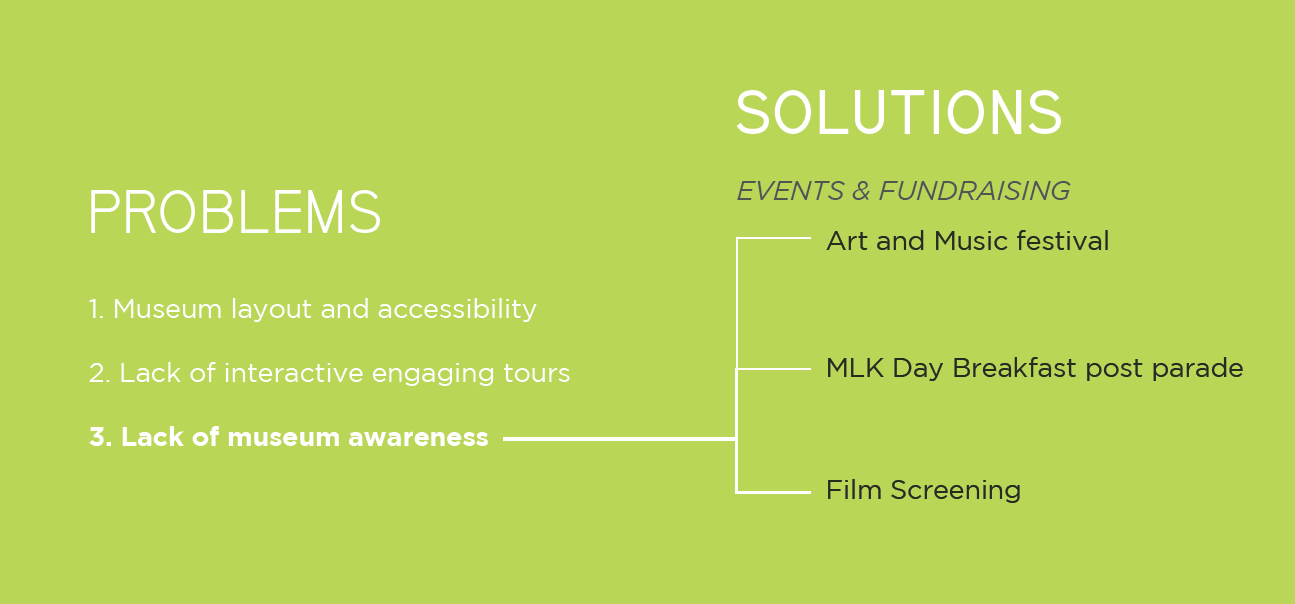
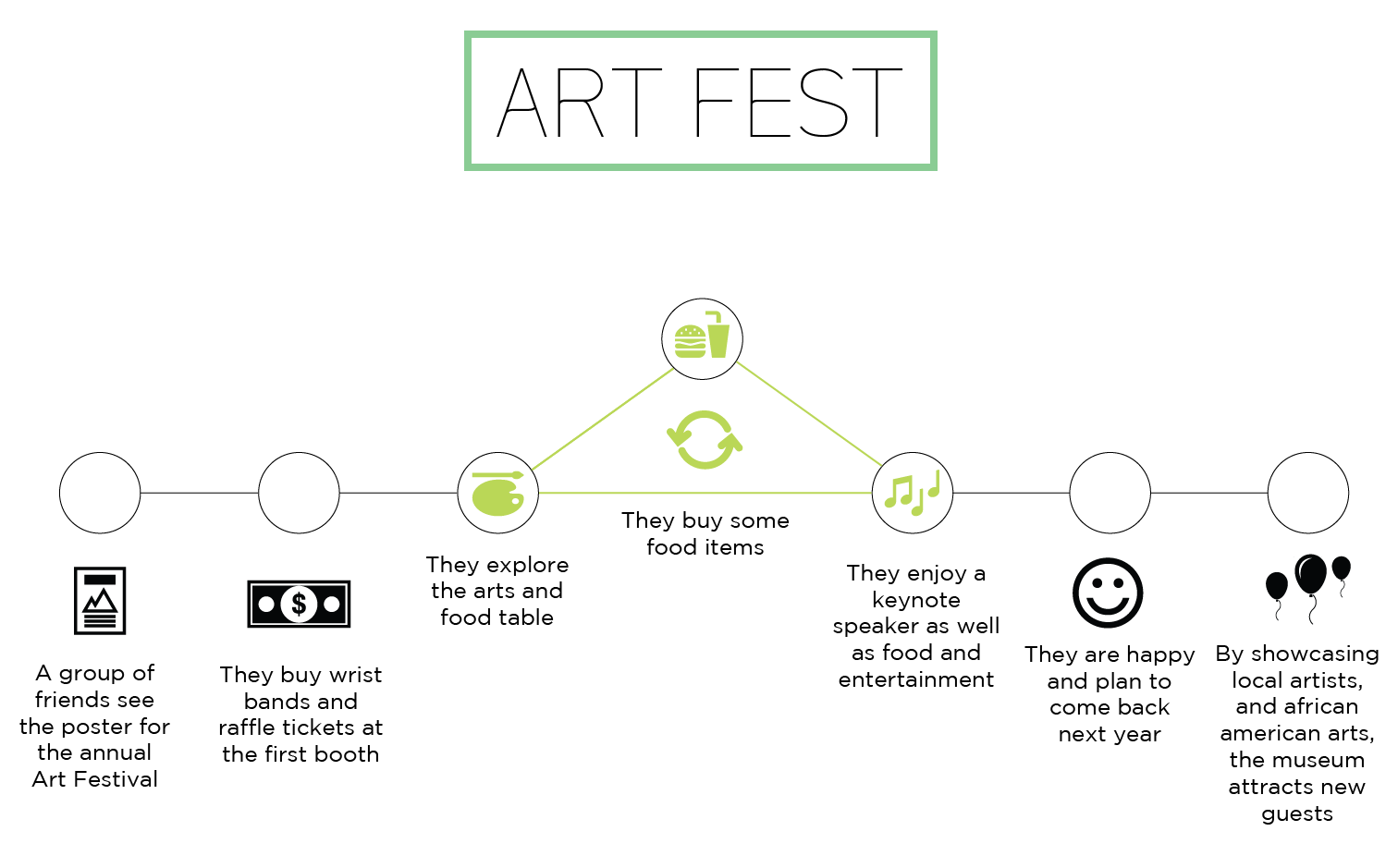
Problem: The museum wishes to involve the community as local residents are unaware of the museum.
Solution: Special events hosted by the museum will give exposure in the local area and ensure community involvement.
Alongside the Ralph Gilbert Mark Civil Rights Museum our team focused on implementing better wayfinding, developing interactive tours, and integrating the museum into the local community. We found that these solutions tackled key problems that the civil rights museum faced. We detailed what the new service would be like and how it would positively affect both the museum and the community.